


GFRP REBAR FOR
NUCLEAR & INDUSTRIAL FLOORS
Advanced Corrosion Resistance.
Built for Safety. Designesd for Longevity


Corrosion Resistant
Dielectric
Durable
Radio Transparent
What are Nuclear & Sensitive Installations?
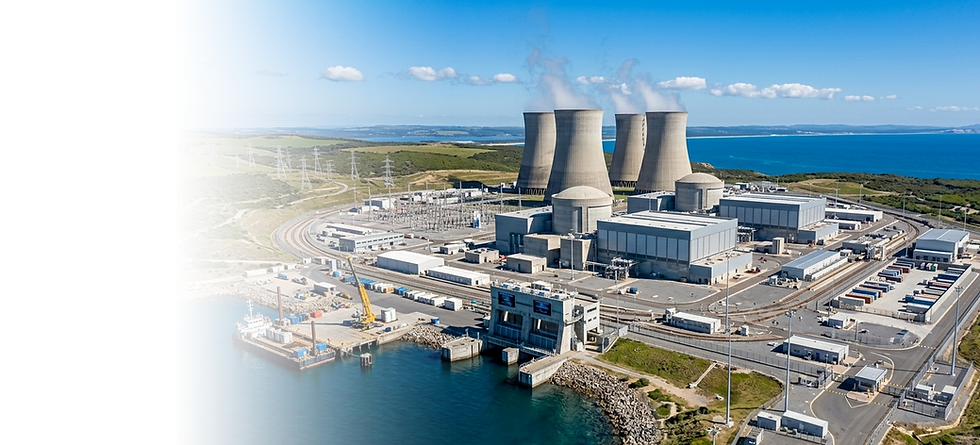
Nuclear and sensitive installations refer to highly specialized facilities where structural materials must meet strict performance, safety, and operational requirements. These include nuclear power plants, research reactors, radiation therapy units, defence facilities, data centres, MRI rooms, laboratories, and high-precision manufacturing environments.
Such installations often involve electromagnetic fields, radiation exposure, sensitive electronic equipment, and strict safety regulations. Even minor interference or material degradation can affect system accuracy, safety, and long-term reliability.
The Need for Specialised Reinforcement
Traditional steel reinforcement, while widely used, presents several challenges in these environments:
-
Magnetic interference can disrupt sensitive instruments such as MRI scanners and precision lab equipment
-
Electrical conductivity may lead to stray currents, posing safety risks and affecting equipment performance
-
Corrosion risks increase in controlled environments where moisture, chemicals, or radiation may be present
-
Maintenance challenges in critical facilities where downtime is costly and often unacceptable
As a result, there is a growing need for reinforcement materials that are non-magnetic, non-conductive, corrosion-resistant, and highly durable, while still providing the required structural strength.
Why GFRP is Ideal for Nuclear & Sensitive Installations?
GFRP (Glass Fiber Reinforced Polymer) rebars offer a unique combination of properties that make them highly suitable for such demanding applications.
1. Non-Magnetic Nature
GFRP rebars do not interfere with magnetic fields, making them ideal for:
-
MRI rooms
-
Research laboratories
-
Defence and radar facilities
This ensures accurate functioning of sensitive equipment without distortion or signal disruption.
2. Non-Conductive Properties
Unlike steel, GFRP does not conduct electricity. This provides:
-
Protection against stray currents
-
Reduced risk of electrical hazards
-
Improved safety in high-voltage or electrically sensitive zones
3. Corrosion Resistance
GFRP is completely resistant to corrosion, even in:
-
Moist or chemically controlled environments
-
Radiation-prone zones where material degradation can occur
This ensures long-term structural integrity without the need for protective coatings or frequent maintenance.
4. Electromagnetic Transparency
GFRP allows electromagnetic signals to pass through without interference, which is critical for:
-
Communication systems
-
Data centres
-
Shielding-sensitive installations
5. Long Service Life with Minimal Maintenance
In nuclear and high-security environments, maintenance activities can be complex and expensive. GFRP offers:
-
Extended lifespan (often exceeding 50–100 years)
-
Minimal need for inspection or repair
-
Reduced lifecycle costs
6. Lightweight and Easy Installation
The lightweight nature of GFRP simplifies handling and installation, especially in controlled or restricted environments where heavy equipment usage may be limited.
Why GFRP is Better than Steel Nuclear & Sensitive Installations
Factor | Steel Reinforcement | GFRP Reinforcement |
|---|---|---|
Suitability for Sensitive Environments | Limited | Highly suitable |
Maintenance | High | Minimal |
Electromagnetic Interference | Possible | None |
Corrosion Resistance | Prone to corrosion | Fully corrosion-resistant |
Electrical Conductivity | Conductive | Non-conductive |
Magnetic Properties | Magnetic | Non-magnetic |
For nuclear and sensitive installations, where precision, safety, and long-term reliability are critical, material selection plays a vital role. GFRP rebars address the limitations of traditional steel by offering non-magnetic, non-conductive, and corrosion-free performance, making them an ideal reinforcement solution for these highly specialized environments.