


GFRP REBAR FOR
SEPTIC TANKS
Corrosion-Free Performance Underground.
Perfect for harsh chemical and wastewater environments.

Water
Resistant
Corrosion
Resistant

Zero
Maintenance


Durable
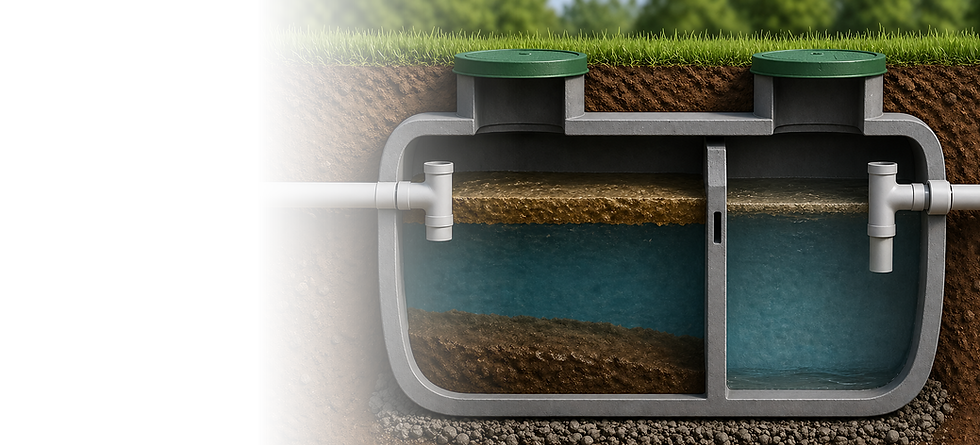
What is a Septic Tank?
A septic tank is an underground wastewater treatment system commonly used in residential, commercial, and rural areas without access to centralized sewage systems. It is designed to collect, treat, and partially decompose wastewater from toilets, sinks, and other household drains.
Septic tanks are continuously exposed to moisture, organic matter, and corrosive chemicals like detergents, acids, and sulphates. They must be structurally sound, leak-proof, and durable to ensure safe and hygienic wastewater management.
The Need for Specialised Reinforcement
Septic tanks face unique structural challenges that demand corrosion-resistant reinforcement:
-
Continuous exposure to wastewater, which contains aggressive chemicals that can corrode steel
-
Hydrostatic pressure from surrounding soil and water table, requiring strong structural support
-
Long-term durability, since repair or replacement of underground tanks is costly and disruptive
-
Environmental and health safety, requiring leak-proof and structurally reliable systems
Steel reinforcement, while strong initially, is prone to rust and chemical degradation, which can lead to leaks, structural failure, and contamination.
Why GFRP is Ideal for Septic Tanks?
GFRP (Glass Fiber Reinforced Polymer) rebars provide an ideal reinforcement solution for septic tanks due to their durability, chemical resistance, and long-term performance.
1. Corrosion-Free Performance
-
Completely resistant to moisture, wastewater, and chemical attack
-
Eliminates rust-related cracking and spalling
-
Ensures the tank remains leak-proof and structurally sound over its service life
2. High Tensile Strength
-
Provides excellent reinforcement for walls, bases, and lids of septic tanks
-
Supports loads from soil and groundwater pressures
-
Controls cracking due to hydrostatic forces and structural loads
3. Lightweight and Easy Handling
-
GFRP is significantly lighter than steel, simplifying:
-
Transportation of reinforcement to the construction site
-
Placement inside confined underground tank spaces
-
Overall installation, reducing labour effort
-
4. Durable in Aggressive Environments
-
Resistant to sulphates, acids, and other chemicals present in wastewater
-
Performs reliably under continuous wet conditions
-
Maintains structural integrity even in challenging soil conditions
5. Reduced Maintenance and Lifecycle Cost
-
No corrosion means minimal maintenance over decades
-
Avoids costly repairs due to steel deterioration
-
Increases lifespan of septic tanks, providing a cost-effective solution
6. Environmental and Health Safety
-
Corrosion-free reinforcement prevents leakage and contamination
-
Maintains the hygiene and safety of surrounding areas
-
Ensures compliance with environmental and sanitary regulations
Why GFRP is Better than Steel for Septic Tanks
Factor | Steel Reinforcement | GFRP Reinforcement |
|---|---|---|
Corrosion Resistance | Rust-prone in wastewater and chemicals | Fully corrosion-free |
Durability | Limited due to chemical attack | Long-lasting in aggressive environments |
Maintenance | High, costly | Minimal, low-maintenance |
Weight | Heavy, difficult to handle | Lightweight and easy to place |
Structural Safety | Vulnerable to cracking and leaks | Stable, leak-proof reinforcement |
Service Life | Reduced | Extended (50+ years) |
Septic tanks require reinforcement that is resistant to corrosion, chemically durable, and structurally robust. GFRP rebars deliver corrosion-free performance, high tensile strength, and long-term reliability, making them the ideal reinforcement choice over steel for modern septic tank construction.